Some links on this site may be affiliate links
The Camera You Carry
The Camera You Carry: Smartphone Photography as a Conscious Choice
The most important camera is the one you have with you. This phrase, attributed to Chase Jarvis and repeated in countless photography forums, has become a mantra for those who believe that availability outweighs technical perfection. But in the age of smartphone photography, this statement is no longer an excuse - it is a creative position.
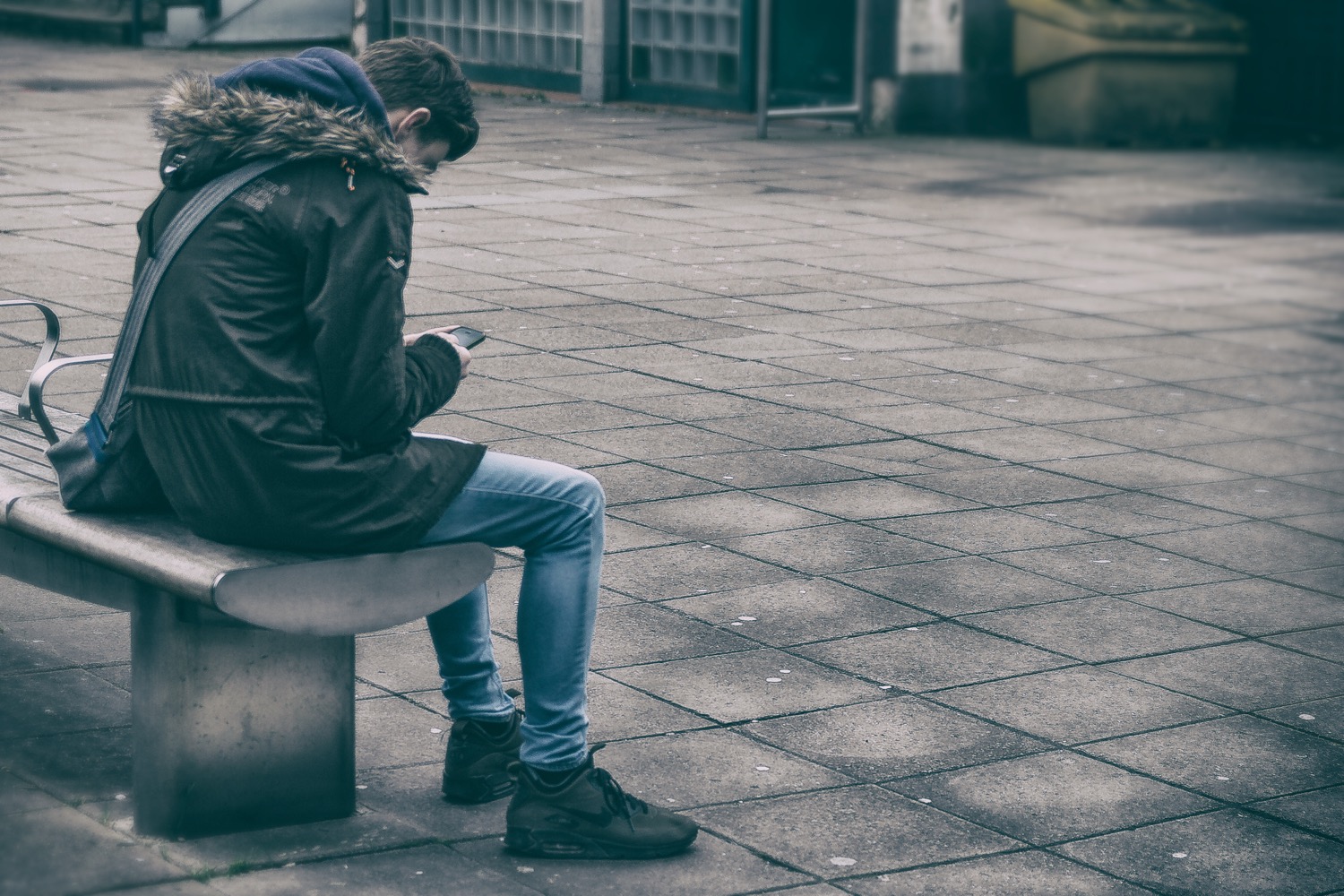
A person looking at their phone. Photo by James Sutton, CC0. Source
.jpg)
What does it mean to choose the smartphone as your primary camera? Not out of necessity, not because you forgot your "real" camera at home, but as a deliberate, conscious decision? This text explores photography that does not seek forgiveness for its tool but builds its language around constraints.
The Constraint That Liberates
In photography, restriction has always been a catalyst for creativity. The square format of a Rolleiflex, the 36 exposures of a roll of film, the fixed focal length of a street photographer's lens - each limitation shaped the visual language of those who embraced it. The smartphone is no different.
What makes the smartphone camera unique is not its technical capability but its constant presence. It is the only camera that is with you at all times - at the breakfast table, on the commute, during moments that would never justify carrying a dedicated camera. The barrier between life and photography dissolves. You stop planning images and start noticing them.
The constraint of the smartphone camera - its small sensor, its lack of optical zoom, its computational processing - becomes a framework within which a distinct visual language emerges. Close, intimate framing. Attention to light rather than detail. Composition over resolution.
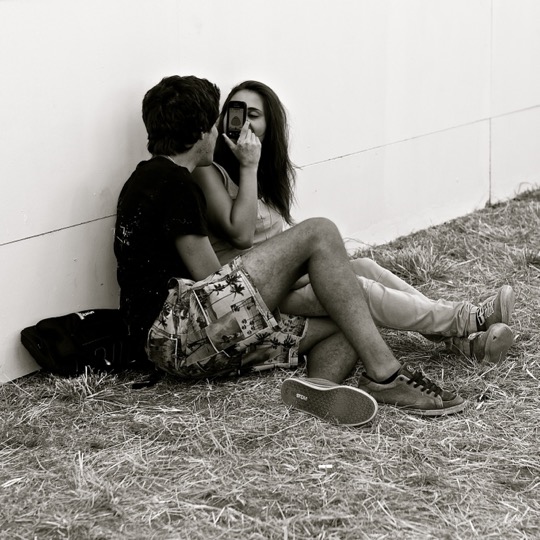
Creative mobile photography by Pedro Ribeiro Simões, CC BY 2.0. Source
.jpg)
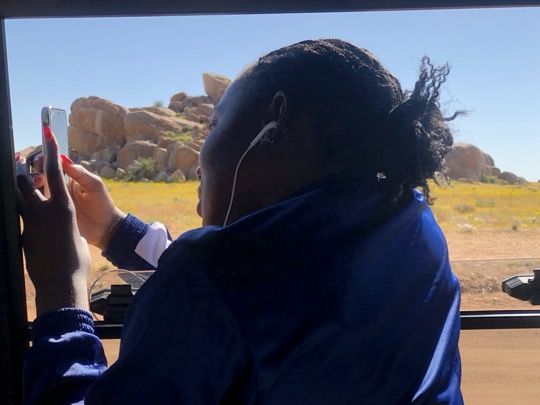
Capturing the Namibian desert through a phone camera by Martin Hipangwa, CC BY-SA 4.0. Source

The Aesthetics of Imperfection
There is a particular quality to smartphone photography that does not imitate the larger formats but instead develops its own character. The depth of field is vast, which forces the photographer to think in terms of layering and composition rather than selective focus. The dynamic range, though impressive, handles highlight roll-off differently than a full-frame sensor. The colour science varies dramatically between manufacturers.
But these are not shortcomings. They are the vocabulary of a medium.
Just as Daido Moriyama embraced grain, blur, and high contrast as expressive tools, the smartphone photographer learns to work with HDR halos, lens flare from an uncoated piece of glass, and the distinct look of computational sharpening. These artifacts, often dismissed as technical flaws, can become signatures of a personal style.
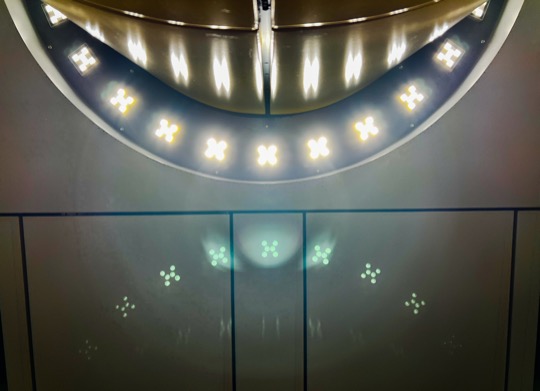
Lens flare, reflections and ghosting in mobile phone photography as a photographic style. Photo by XoMEoX, CC BY 4.0. Original file

The Observational Mode
Smartphone photography changes not only the image but also the photographer's relationship to the world. A dedicated camera announces intent. It signals that one is "doing photography." The smartphone, by contrast, blends into everyday behaviour. It is the same device used for messaging, navigation, and reading the news. When you raise it to take a photograph, the gesture is familiar, unremarkable.
This invisibility has a profound effect on street photography and documentary work. Subjects are less aware, less posed, less performative. The photographer becomes a participant rather than an observer with a conspicuous device. The result is a different kind of truth in the image - less staged, more lived.
There is a rich tradition of photographers who used whatever was at hand - Robert Frank with his Leica, Garry Winogrand with his wide-angle, William Eggleston with his dye-transfer printing. The smartphone continues this lineage, not by replacing these tools but by adding another: a camera small enough to forget you are carrying, yet ready the moment something worth seeing appears.
Beyond the Megapixel Race
Contemporary discourse around smartphone photography is dominated by specifications - megapixel counts, sensor sizes, aperture values, computational photography algorithms. This technical language obscures a more fundamental question: what kind of images does this tool encourage?
The smartphone camera, precisely because of its limitations, tends toward certain kinds of images: intimate, immediate, personal. It favours moments over landscapes, details over panoramas, encounters over compositions. It is a tool for the near and the now.
This is not a weakness. The history of photography demonstrates that every technical limitation has given rise to a new visual language. The smartphone is simply the latest constraint to be transformed into a creative opportunity.
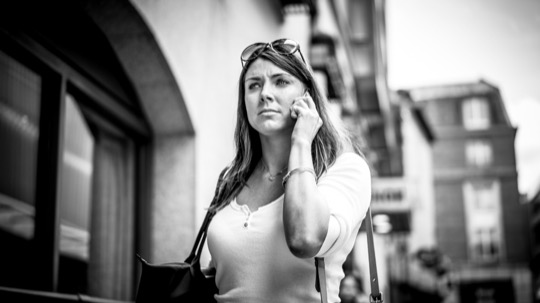
Street photography with a phone in Dublin, Ireland. Photo by Giuseppe Milo, CC BY 2.0. Source
.jpg)
A Conscious Choice
To choose the smartphone as one's camera is to accept a set of limitations and to work within them purposefully. It is an acknowledgement that the image matters more than the equipment, that presence is more valuable than resolution, and that the best photograph is not the sharpest or the most technically accomplished but the one that could only have been taken at that precise moment.
In an era of image saturation, when every device promises better, sharper, more detailed captures, the conscious choice of limitation is an act of resistance. It says: I do not need more. I need what is here, now, in front of me.
And for that, the camera I carry is enough.
Further reading
- The Ricoh GR series - a compact camera philosophy discussed in our earlier article on fatigue with the perfect image
- Books on mobile photography on Amazon
- Daido Moriyama: Beauty in Imperfection - on imperfection as a visual language
Co-created by human and AI.