Some links on this site may be affiliate links
William Klein: The Original Provocateur
William Klein: The Original Provocateur
When Daido Moriyama spoke of the photographers who shaped his vision, he mentioned William Klein alongside Weegee and Andy Warhol - not as an influence, but as a liberator. Someone who proved that photography does not need to be polite, well-composed, or even clearly focused to cut deep.
Klein arrived at photography sideways. Trained as a painter, shaped by his time assisting Fernand Leger in Paris, he saw the camera not as a precision instrument but as a blunt object. His first photographic project, Life is Good & Good for You in New York (1956), was born not from a commission but from frustration. Klein had returned to his native New York with a grant to paint murals. When he realised he could not paint what he saw, he picked up a camera.
The result was a book that looked like no photography book before it.
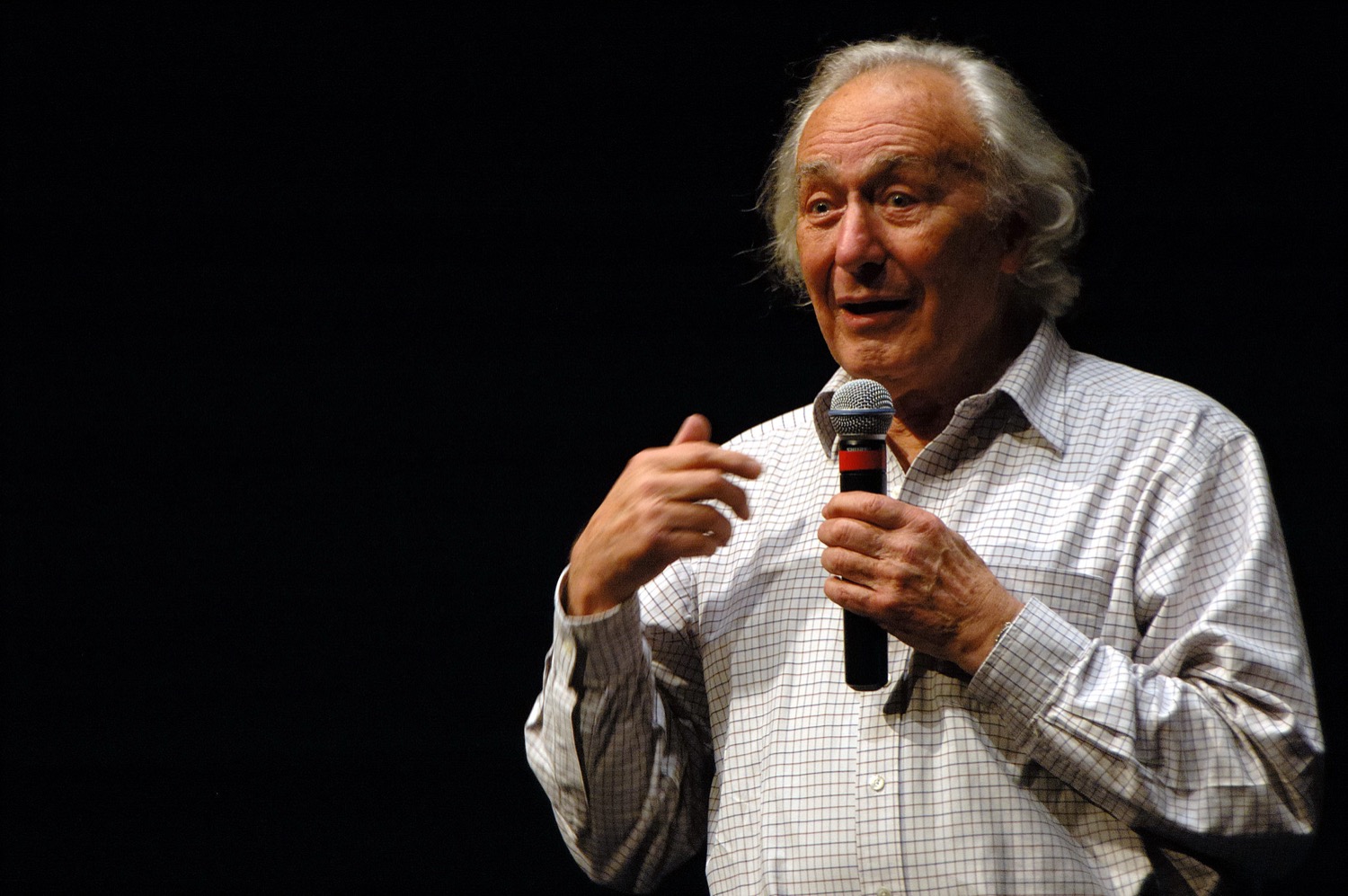
William Klein at the Cinematheque francaise. Photo: CC BY-SA 3.0. Source

The Camera as a Weapon
Klein shot New York with a 21mm wide-angle lens - an extreme choice for the time. He got close, sometimes inches away. He did not ask permission. His subjects appear startled, amused, or confrontational. The frames are crowded, tilted, sometimes blurred by motion. Grain is not a flaw but a texture.
Where the dominant street photography of the 1950s - Cartier-Bresson's decisive moment, Robert Frank's poetic distance - sought grace or meaning, Klein sought collision. His images do not observe the city; they are hit by it. There is no politeness, no compositional safety. Just the raw, messy, exhilarating chaos of urban life.
This approach - aggressive, immersive, technically reckless - is the direct ancestor of what Moriyama would later call are, bure, boke. Grainy, blurry, out of focus. Not as failure, but as method.
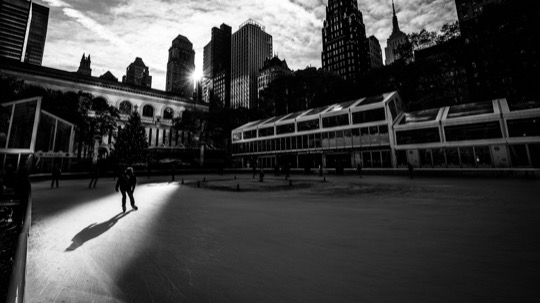
Bryant Park, New York. Street photography by Giuseppe Milo, CC BY 3.0. Source
.jpeg)
From New York to Tokyo
Klein's influence spread far beyond New York. In Tokyo, young photographers encountered his work through smuggled copies of Life is Good and his subsequent books on Rome, Moscow, and Tokyo itself. The freedom Klein demonstrated - the permission to break rules - resonated deeply in a photographic culture still finding its voice after the war.
The connection between Klein and Moriyama is not stylistic but philosophical. Both understood that the city is not a subject to be framed but an environment to be inhabited. Both used the camera as a way of being in the world, not observing it from outside. Both embraced the accident, the blur, the frame that bleeds.
When Moriyama wrote that he wanted to photograph "things that are alive," he was echoing what Klein had already done - turning the street into a living organism and the photographer into a cell within it.
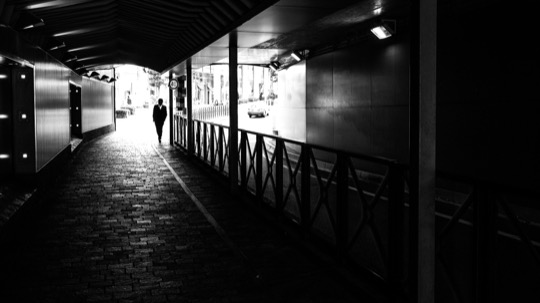
Tokyo street photography. Photo by Giuseppe Milo, CC BY 3.0. Source
.jpeg)
Imperfection as Identity
What makes Klein radical, even today, is not just what he photographed but how. His negatives were often underexposed, his prints pushed to maximum contrast. He used crude lithographic reproduction in his books instead of fine art printing. The images in Life is Good look like newspaper clippings, not gallery prints. This was deliberate.
Klein understood that the medium must match the message. New York in the 1950s was not a place of quiet beauty. It was loud, chaotic, sometimes ugly. Photographing it with a clean, technically perfect style would have been a lie. Grain, blur, and harsh contrast were not compromises - they were the only honest way to see.
This lesson travelled directly to Japan. Moriyama's high-contrast, grain-heavy prints are not a stylistic quirk. They are a philosophical position, inherited from Klein and adapted to a different city, a different chaos.
Legacy
Klein eventually moved away from still photography, directing feature films and documentaries. But his photographic work never lost its grip on the medium. Every photographer who has ever chosen to shoot wide, close, and without apology is working in Klein's shadow.
The next time you see a street photograph that feels alive - not because of its composition, but despite it - you are seeing William Klein's influence. Before Moriyama, before Provoke, there was Klein. The original provocateur.
Further reading
- Daido Moriyama: Beauty in Imperfection - our earlier article on are-bure-boke and Moriyama's visual language
- William Klein on Wikipedia
- Books on street photography on Amazon
Co-created by human and AI.