Some links on this site may be affiliate links.
Dieter Rams and the Paradox of Good Design
Imagine picking up a Braun T3 radio. It is small. It fits in your palm. There are no unnecessary buttons, no attempts to be anything other than what it is. A plastic casing, a simple dial, frequency selection. A tiny opening at the back through which the sound emerges. It was designed in 1958.
If you placed it next to an average smart speaker from 2026, the difference would not be merely technological. It would be existential. One tries to be an assistant, a hub, a decoration, a status symbol, a cloud interface, a loud speaker, a quiet speaker, an alarm clock, a photo frame, and a command center for the smart home. The other just plays the radio.
This is what Dieter Rams meant when he said less but better.
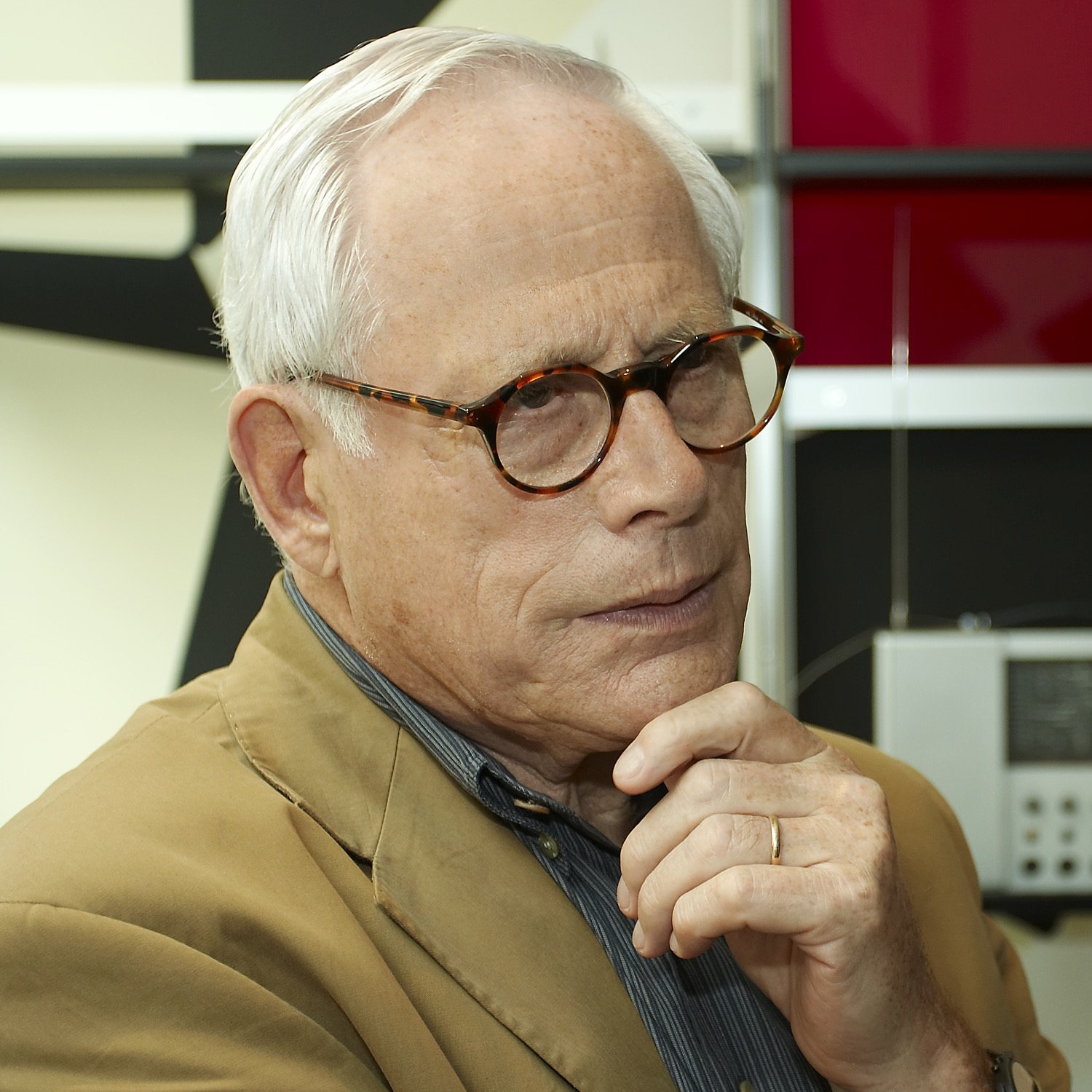
Dieter Rams, German industrial designer who shaped the visual language of Braun for over four decades. Credit: Vitsœ, CC BY-SA 3.0. Wikimedia Commons

Two sides of the same story
Dieter Rams became head of design at Braun in 1961. He was 29. The company produced electronic equipment at a time when consumer electronics were ceasing to be furniture and becoming everyday objects. Television sets, radios, record players, shavers, slide projectors. The list sounds mundane, but it was precisely within this ordinariness that Rams achieved something rare: he created a visual language so consistent that we still recognize Braun from across a room.
He did it by designing for industry. For a corporation. For mass production. Yet today, we read his work as a manifesto of aesthetic integrity. And here lies the first paradox: Rams never intended to create art. He intended to create good products. But his definition of "good" turned out to be so radical that it stopped being merely functional and became philosophical.
When he finally formulated his ten principles of good design, they did not sound like corporate guidelines. They sounded like something that should hang on the wall of every company that makes anything:
Here are the first three:
- First: Good design is innovative. Not innovative for its own sake - innovative in the sense of seeking a better solution.
- Second: Good design makes a product useful. Not beautiful, not impressive - useful.
- Third: Good design is aesthetic. But Rams' aesthetic is not decoration. It is clarity.
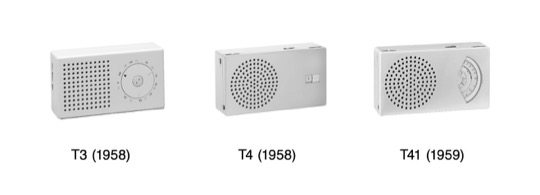
Three Braun radio models designed by Dieter Rams: T3, T4, and T41. The differences between them are subtle, but each successive model is cleaner in form. Credit: PeterAjtony, CC BY-SA 4.0. Wikimedia Commons

Design as ethics
If he had stopped at the first three principles, we would simply have guidelines for solid design. But Rams went further. And this is where his thinking stops being an instruction manual and becomes an ethos.
Fourth: Good design is understandable. This does not mean intellectually simple - it means that the structure is readable. You do not need a manual to know how it works. You know because the form tells you. In an era of "tabletosis", apps with hidden gestures and products with interfaces that require tutorials, this sounds almost subversive.
Fifth: Good design is unobtrusive. Products should be neutral, like tools. Rams said that good design is like a Japanese wooden cabinet made by traditional methods - it does not shout with clever gimmicks, but their presence is felt. This might be the hardest principle to apply in a world where every product fights for your attention. Even refrigerators now have screens proclaiming their innovativeness to all and sundry.
Sixth: Good design is honest. It does not try to sell you more than it actually delivers. It does not pretend to use materials it has not. It does not promise functions it lacks. This sounds self-evident, but look at the consumer market: plastic pretending to be metal, veneer pretending to be solid wood, apps pretending to respect your privacy.

The iconic Braun ET66 calculator (1987), designed by Dieter Rams and Dieter Lubs. Its key layout became the inspiration for digital interfaces worldwide. Credit: Kippelboy, CC BY-SA 3.0. Wikimedia Commons

Permanence and disposability
The seventh and eighth principles deal with time: Good design is long-lasting and Good design is thorough down to the last detail. In an age of planned obsolescence and annual product cycles, these principles carry a bitter resonance.
Rams designed objects meant to serve. Not for a year, not until the next model - for decades. The 606 shelving system he designed in 1960 is still in production today. Not as a reissue - as the same product. The 620 chair has been in continuous production since 1962. Only the upholstery fabrics have changed.
This is not nostalgic conservatism. It is a radical critique of consumerism, executed through design. Instead of writing manifestos, Rams simply designed things that no one wanted to throw away.
The ninth principle is often overlooked: Good design is environmentally friendly. Rams thought about this before it became fashionable. Material economy, durability eliminating the need for replacement, repairability - these are not add-ons but logical consequences of the other principles. A product that serves for decades does not end up in a landfill.
The tenth and final principle is the most famous: Good design is as little design as possible. In Rams' own words: less but better. He spoke of it in terms of returning to purity, to essence. A product should be stripped of everything unnecessary. Not because minimalism is fashionable, but because every superfluous element distracts from what matters.
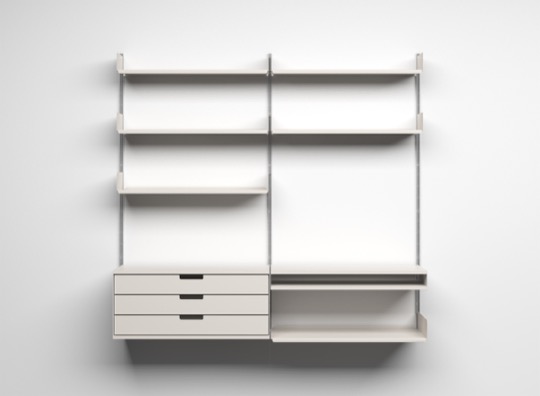
The 606 Universal Shelving System (1960) by Dieter Rams. In continuous production for over sixty years. Credit: Vitsœ, CC BY-SA 3.0. Wikimedia Commons

The irony of legacy
And here emerges a second, deeper paradox. Rams' influence on contemporary design is immeasurable. Apple has repeatedly cited Rams as an inspiration. Jony Ive spoke of him directly. There is hardly a design director, architect, or creative executive today who does not know at least three of Rams' principles.
And yet the world of products that surrounds us is a negation of those principles.
Products are designed to break. Interfaces are designed to frustrate. Materials are designed to pretend. Consumer attention is a currency fought over without scruple. Rams spoke of design as invisible service. Today's design is often a scream.
Does this mean Rams lost? No. It means his principles were never industry guidelines - they were an indictment. He formulated them in the 1970s, when he began to see where the world of objects was heading. He saw excess. He saw superficiality. He saw designing for the sake of designing. His principles were meant as a counterweight.
They have not stopped being one. In some ways, they have become more important.
What does "good" mean in the age of AI?
This leaves a question Rams would probably ask himself: what does design mean today? In an age where an algorithm can generate a thousand variations of the same product in seconds? Where the line between designer and user is blurring? Where objects are no longer physical and become interfaces, and interfaces become transparent?
Perhaps the most important lesson from Rams is not about design at all. It is about limitation. Rams designed in an era where choice mattered because it was limited. Every design decision was a choice between A and B, and then between B and C. Today we have an infinite palette of possibilities and, paradoxically, an increasingly difficult time choosing.
Rams had the courage to leave things out of the design. Not to add. Not to extend. Not to keep iterating. Simply to decide what was essential and remove the rest.
In a world where everything can be done, the hardest question remains: what should exist?
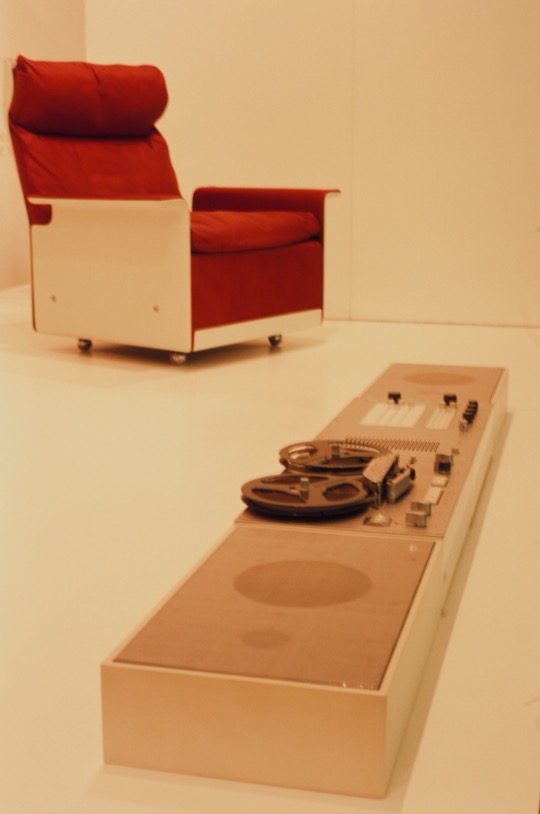
Braun Stereo System designed by Dieter Rams together with the Vitsoe 620 armchair. Rams designed not single objects but entire environments. Credit: tomislav medak, CC BY 2.0. Flickr
Further Reading
- Dieter Rams - Wikipedia
- Vitsœ - 606 Universal Shelving System
- Dieter Rams: 10 Principles of Good Design - Design Museum
Co-created by human and AI.