Some links on this site may be affiliate links
Blow-Up
There is a scene in Blow-Up that everyone talks about. The photographer returns to the studio, develops the pictures taken in the park and begins to enlarge them. First he notices something he had not seen before. Then he thinks he sees more. In the end the image dissolves into grain and you can no longer tell whether you are looking at a body, a bush or your own imagination.
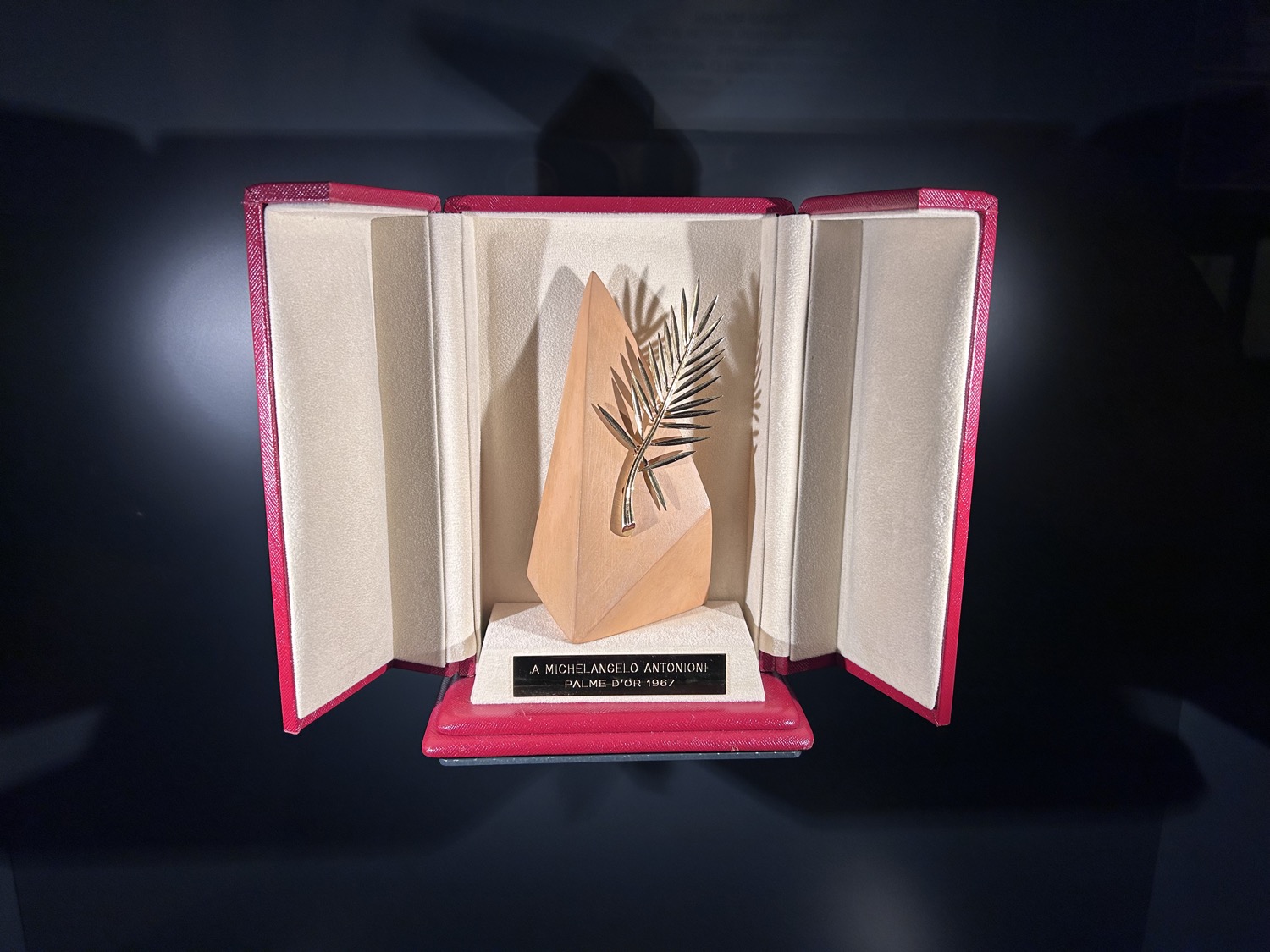
Michelangelo Antonioni with the Palme d'Or for Blow-Up, Cannes 1967. Photo: Nicola Quirico, CC BY-SA 4.0. Source

Every time I come back to this film, what surprises me is something earlier. Not the darkroom scene, but the moment the shutter was pressed.
Thomas walks through Maryon Park the way photographers like to walk: without a clear purpose, counting on the world to arrange itself into a picture. He sees a woman and an older man. Nothing special about it. A few shots from a distance, one more. The woman turns her head. A moment later she is running toward him.
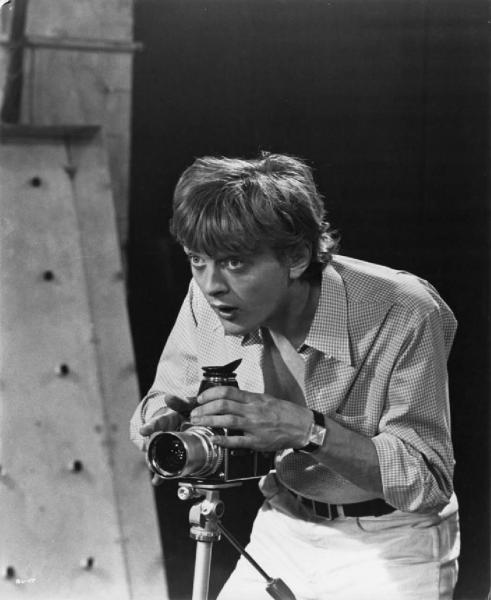
Thomas (David Hemmings) with his camera. Production still (1966), collection of the Museo di Fotografia Contemporanea in Cinisello Balsamo, Lanfranco Colombo fund. CC BY-SA 4.0. Source

The first time, you might think it is his presence that upsets her. Today I am no longer so sure. Maybe she is not reacting to the man with the camera, but to the fact that something has been recorded.
There is something strange about photographing. In everyday life we hardly notice it, because we take pictures all the time. But when someone points a camera at us, the situation changes at once. The moment stops belonging only to those who took part in it. From then on it can exist somewhere else, in another time, in other people's eyes. A relationship is created, and it is usually personal, at least in some dimension.
I do not know whether Antonioni thought about it this way. Not a single line in the film explains it. That is exactly why this scene seems more interesting to me than all the later interpretations. Maybe the woman wants the film back not because she is hiding a murder. Maybe because she wants her own afternoon back.
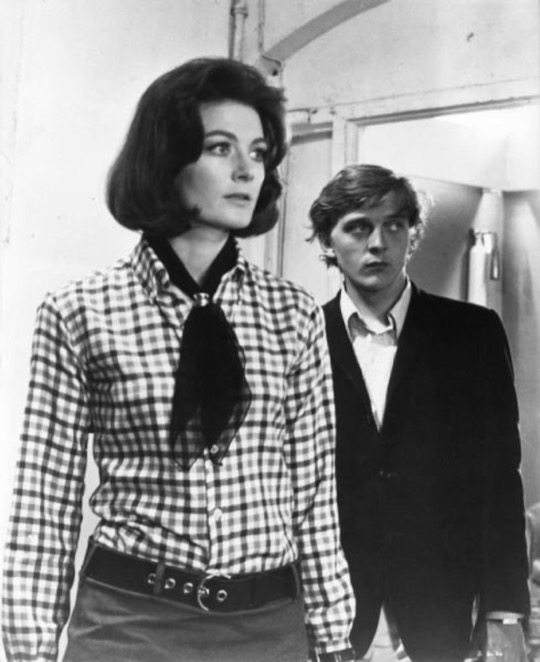
Jane (Vanessa Redgrave) and the man from Thomas's photograph. Production still (1966), collection of the Museo di Fotografia Contemporanea in Cinisello Balsamo, Lanfranco Colombo fund. CC BY-SA 4.0. Source

Photography used to have a reputation as a witness. If something was on the film, it meant it had really been there. Of course you could crop, stage scenes, manipulate the print. Still, there was a conviction that the camera saw more than a man does. Blow-Up was made at a time when that faith was still very strong.
That is why the enlargement scene works so well. Thomas does not discover the truth at once - he digs it out. One more enlargement. One more piece of paper. A bigger format, until it suddenly turns out that there is no threshold beyond which the image becomes more true.
It is the opposite of logic - from a certain point on, every further enlargement reduces information instead of adding it. This is probably the most paradoxical part of the whole film. The photographer does exactly what photographers have been taught since the beginning of the medium: look more carefully. And the more carefully he looks, the less he sees, the less he knows.
I sometimes wonder whether this film would look different today. Probably there would be no darkroom. Instead there would be a monitor or a tablet, and enlarging with two fingers on the screen. But the mechanism would stay the same. How often do we enlarge a photo today just to check a detail? A face in the background. A car's license plate. A reflection in a window. Who is standing a few meters away.
Every time we believe that all we need is to zoom in. As if the truth were waiting a few pixels further.
And yet usually exactly the same thing happens as in Antonioni. The image starts to fall apart. Algorithms try to guess the missing information. Noise mixes with compression. The more we want to see, the more we add ourselves. Maybe that is why Blow-Up has not aged as much as one might think. The tools have changed, but not our expectation of images. We still want them to tell us more than they truly can.
The last scene remains the most puzzling for me. Mimes play tennis without a ball. Thomas watches them from a distance. Then he throws the invisible ball back onto the court. For years I took this gesture for a reconciliation with illusion. Today I am no longer sure. Maybe after the whole film Thomas finally understood something simpler. That the world is not divided into reality and fiction as clearly as a photographer would like.
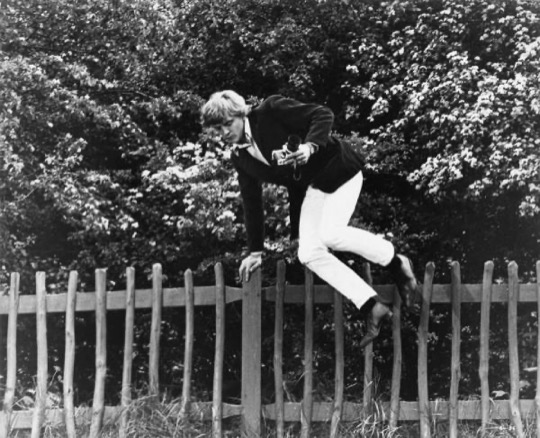
David Hemmings on the set of Blow-Up. Production still (1966), collection of the Museo di Fotografia Contemporanea in Cinisello Balsamo, Lanfranco Colombo fund. CC BY-SA 4.0. Source

After all, a photograph is also an agreement. A rectangle of paper contains no people, no trees, no light. It contains only traces of light. The rest is always added by the viewer. Antonioni does not take away photography's value. He takes away its privilege of being the final witness, and that is a subtle difference.
After the screening one question remains for me. Not whether the murder really happened. I am more interested in why we so badly want to believe that the camera can decide something for us. Perhaps from the very beginning we expected photography to give us something it could never promise. Instead of memory, we wanted certainty.
Further Reading
- Wikipedia: Blow-Up - about the film
- Julio Cortázar: Las babas del diablo - the short story the film is based on
- Wikipedia PL: Powiększenie (film) - the article in Polish
- Blow-Up on Amazon - the film in the Criterion edition
Co-created by human and AI.