Some links on this site may be affiliate links
Daido Moriyama: Photography as Forgetting
Daido Moriyama: Photography as Forgetting
In 1972, Daido Moriyama published a book that should not exist. Farewell Photography is not an album. It is not a retrospective. It is an act of destruction. The pages are black, grainy, blurred to the edge of abstraction. Some look as if someone wiped them with a cloth of developer before they had time to dry. Others are so overexposed that nothing remains but white and the ghostly outline of what might once have been a face or a street.
Moriyama did not photograph to remember. He photographed to forget.
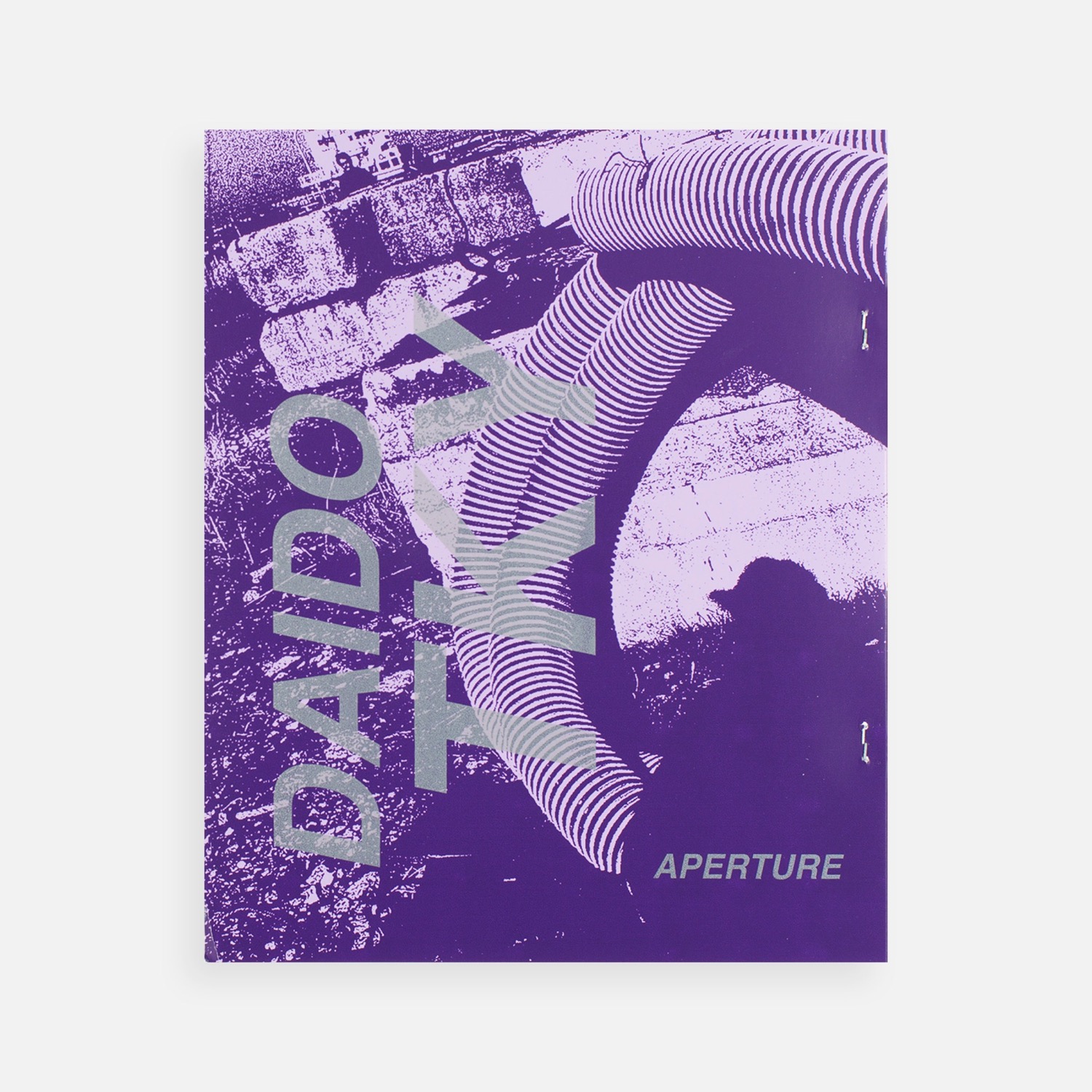
Daido: TKY - a photograph by Daido Moriyama on the cover of the Aperture edition. Promotional material: Aperture Store.
Memory is a burden
Moriyama was born in 1938 in Osaka, as Japan prepared for a war it would lose. His childhood was a country in ruins - physical and psychological. American occupation, atomic trauma, rapid Westernization. An entire generation of Japanese artists grappled with the question of how to photograph the world after Hiroshima. Moriyama's answer: you cannot. But you must try.
His early work from the 1960s, inspired by William Klein and Shomei Tomatsu, was already not photography in any classical sense. Moriyama walked the streets of Tokyo and shot his camera like a weapon. High contrast, grain like sand, tilted frames, sharp as a blow. What he did documented not so much the city as the photographer's state of mind.
And precisely at the moment when he was beginning to be appreciated, he decided to destroy everything.
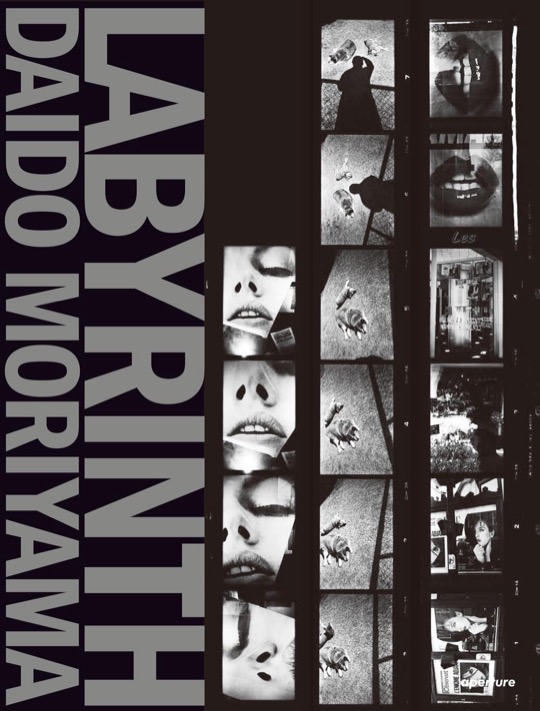
Labyrinth: Daido Moriyama - cover of the Aperture edition. Promotional material: Aperture Store.
Farewell Photography: an act of erasure
Farewell Photography appeared in 1972, at a time when Japanese photography was experiencing its greatest flowering. It was a manifesto opposed to everything people believed in. Moriyama took his own photographs and destroyed them - in the darkroom, through overexposure, through chemical deformation, through physical cutting and assembling prints into illogical configurations.
This was not photography. It was a funeral rite.
The book was decades ahead of its time. Today, in an age when we take thousands of photographs daily and look at none of them, Moriyama's gesture seems prophetic. He understood that the real problem of photography is not a lack of images, but their excess. That the camera does not serve to preserve memories, but to neutralize them.
Take a photograph so that you may forget.
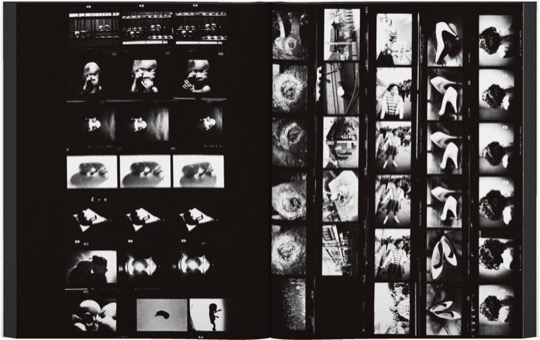
Spread from Labyrinth: Daido Moriyama - showing the photographer's characteristic high-contrast style. Promotional material: Aperture Store.
The street as unremembering
Most critics describe Moriyama as a street photographer. This is true, but incomplete. He did not document the street - he flowed through it. His famous images of Shinjuku, of Tokyo's red-light districts, of bars and alleyways - they do not tell stories. They are fragments, shreds, traces of a presence that has already dissipated.
Moriyama shot quickly, from the hip, without looking through the viewfinder. His camera was an extension of his body, not a tool of control. That is why his images are so often blurred, tilted, badly framed. These are not mistakes. They are method.
In his series Record, published for years as a handmade magazine, Moriyama printed photographs without captions, without dates, often without any order. Each issue was like a roll of the dice - a random set of images that formed not a narrative but a stream of consciousness.

Record No. 47 - Daido Moriyama's self-published magazine. Cover photograph by Moriyama. Promotional material: Shashasha.
Color as a return to zero
In later years, Moriyama began photographing in color. For many, this came as a surprise - the master of black and white, the king of grain, suddenly making images in vivid, almost fluorescent hues.
But color in Moriyama is not joyful. It is as aggressive as black. Tokyo's neon lights, red lanterns, blue fluorescent signs - this is not documentation of a city. It is another layer of forgetting. Color in Moriyama works like fog - it conceals as much as it reveals.
In the series Setting Sun, he returned to black and white, but differently. The images are calmer, more reflective. As if Moriyama, after years of fighting with the image, had finally made peace with the fact that photography can never render reality. And that this is all right.
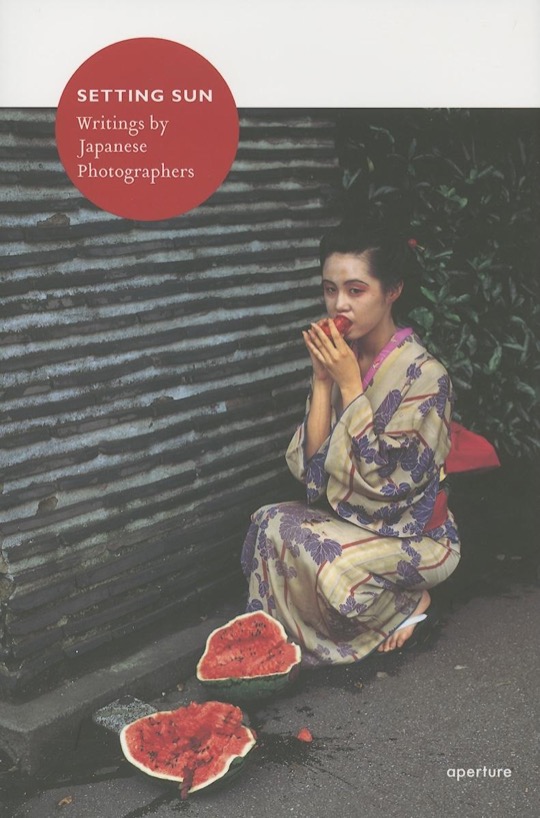
Setting Sun by Daido Moriyama - a later, more reflective series. Promotional material: Aperture Store.
Moriyama's lesson
What does Moriyama teach us? That photography is not for remembering. It is for forgetting. Every photograph we take allows us to discard a moment - to close it, put it away, carry it no longer in our heads. The camera is not a prosthesis of memory. It is a tool of cleansing.
In a world that produces billions of images every day, Moriyama's gesture is more relevant than ever. We do not need more images. We need fewer. We need images brave enough to disappear - images that do not fight for attention but admit their own temporariness.
Moriyama knew that the most powerful photograph is the one we will soon forget. Because only when we stop holding on to images can we truly see.
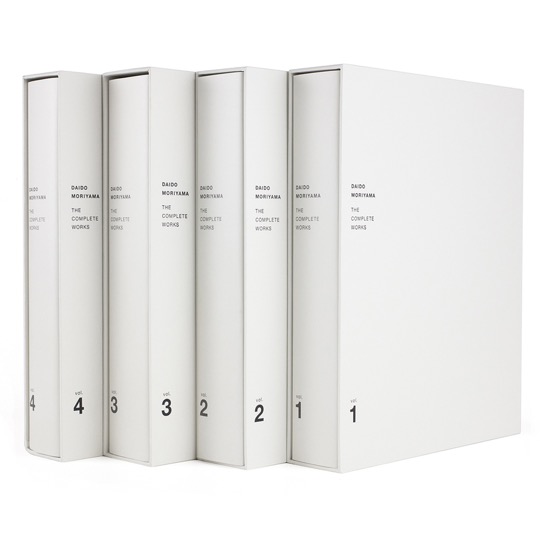
Daido Moriyama: The Complete Works - a survey of the photographer's career. Promotional material: Shashasha.
Further reading
- Daido Moriyama at SFMOMA - works in the collection
- Daido Moriyama official website - archive and biography
- The Guardian: photos Moriyama rescued from fire - the Farewell Photography story
- Labyrinth at Aperture - book at the publisher
- Daido: TKY at Aperture - book at the publisher
- Japanese photography books on Amazon
Co-created by human and AI.