Some links on this site may be affiliate links
Eikoh Hosoe: Photographer of Body and Spirit
Eikoh Hosoe: Photographer of Body and Spirit
In 1963, a young Japanese photographer received a commission that could only have come to him. Yukio Mishima, Japan's most famous writer, asked to be photographed naked. The result was Barakei - Ordeal by Roses: a man with an athlete's torso, a rose in his mouth, in stark black-and-white light, in poses drawn from Christian iconography and homoerotic imagination.
It could have been a scandal. It became a manifesto. And it remains one of the most recognizable photographic series of the twentieth century.
The photographer was Eikoh Hosoe. And while Barakei made him famous, it was just one of many series through which he proved that photography could be more than documentation - it could be body, ritual, and psychodrama.
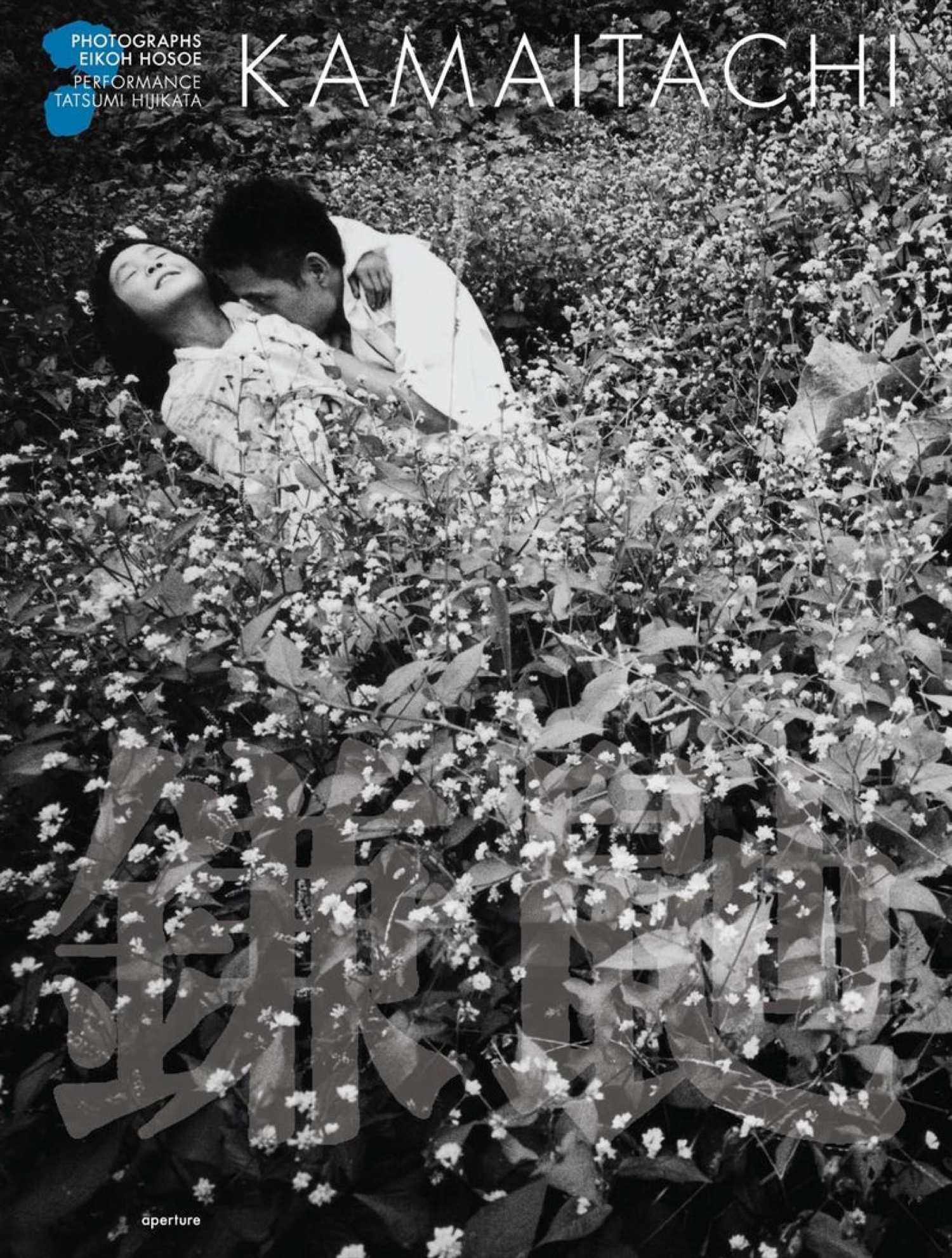
Kamaitachi (1969) - a photograph by Eikoh Hosoe featuring butoh founder Tatsumi Hijikata. Cover of the Aperture edition. Image courtesy Aperture Store. Promotional material from the publisher.
Beginnings: VIVO and a new photography
Hosoe was born in 1933 in Yamagata Prefecture in northern Japan. He studied photography in Tokyo, and in 1959 co-founded VIVO - one of the most important photography agencies in Japan's history. Alongside him: Shomei Tomatsu, Ikko Narahara, Kikuji Kawada, Akira Tanno, and Akira Sato.
VIVO did not last long - it dissolved after two years - but its influence on Japanese photography is immeasurable. Hosoe, Tomatsu, and Kawada blazed a trail that Moriyama and others would later follow. They had no interest in documentary photography in the Western sense. They were searching for a subjective, psychological record of reality.
Hosoe's first major series, Man and Woman (1960), was a study of naked bodies entangled in surreal, often violent configurations. The bodies were not erotic objects - they became landscapes, terrain where a primal human drama unfolded. High contrast, harsh light, tight cropping - Hosoe had already found his language.
Mishima: Barakei / Ordeal by Roses
The encounter with Mishima in 1961 changed everything. The writer had behind him a failed coup attempt (with his private army, the Tatenokai), several life crises, and an obsession with his own body. He wanted Hosoe to photograph him as he saw himself: a hybrid of saint and martyr, ancient hero and contemporary dandy.
The session lasted weeks. Hosoe photographed Mishima in his home, in his studio, in his garden. In one of the most famous images, the writer lies on the ground, mouth open, a rose between his lips - an image of obvious erotic and religious symbolism. In another, he stands in a shaft of light, naked, with a sword, like Saint Sebastian.
Barakei was published in 1963. Mishima approved every image. Seven years later, he committed seppuku. His death, dramatic and public, gave Hosoe's photographs a posthumous, prophetic dimension. Looking at them today, it is hard to escape the feeling that Hosoe was photographing someone who already knew how he would die.
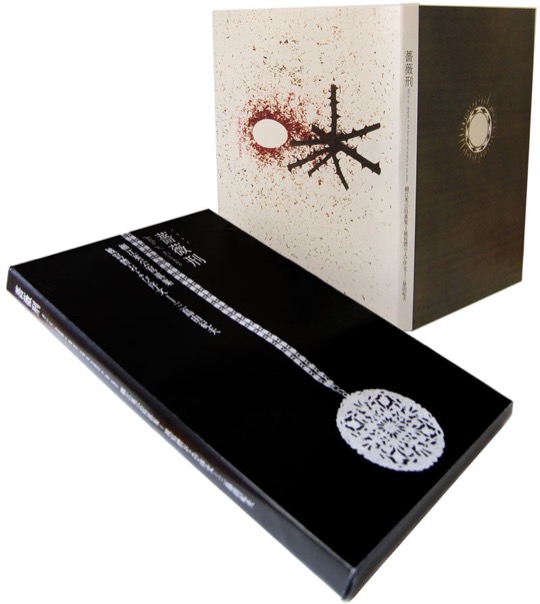
Barakei - Ordeal by Roses (1963) - a photograph by Eikoh Hosoe featuring Yukio Mishima. Cover of the Aperture edition. Image courtesy Aperture Store. Promotional material from the publisher.
Kamaitachi: butoh before the lens
If Barakei was a meeting of photography and literature, Kamaitachi (1969) was a meeting of photography and dance.
Hosoe invited Tatsumi Hijikata, the founder of butoh, to collaborate. Butoh is an avant-garde dance form born from the trauma of Hiroshima, completely rejecting Western concepts of movement. Butoh is the dance of a body searching for its limits - slow, ugly, transgressive. Hijikata was its most important prophet.
Hosoe and Hijikata traveled to northern Japan, to the villages of Akita Prefecture where Hosoe spent part of his childhood. There, among rice fields, barns, and weeping skies, Hijikata danced the Kamaitachi - a legendary weasel said to cut people's legs.
The Kamaitachi images are electrifying. Hijikata in women's kimonos, face painted white, running through a field surrounded by bewildered farmers. He is monstrous, grotesque, transcendent. Hosoe captures it all in his characteristic high-contrast style. There is no doubt who is in control: Hijikata is the absolute center, and Hosoe is his eyes.
Embrace and later work
In the 1970s, Hosoe continued his exploration of the body. In Embrace (1971), he returned to the human couple, but in a more lyrical mode than Man and Woman. Bodies intertwine to such a degree that it becomes impossible to tell where one ends and another begins. This is photography of intimacy as an act of erasing boundaries.
In later years, Hosoe experimented with color photography, worked in film and theater. In 1987 he became director of the Tokyo Museum of Photography. He remained active as a teacher and mentor until the end of his life.
He died in 2024, at the age of 91. His death closed an era, but the images he left behind are as vivid as the day they were made.
Beyond photography
Hosoe was one of the first Japanese photographers whose work was understood and appreciated in the West - not as an exotic curiosity, but as a fully realized voice in world photography. In 2009, his traveling exhibitions in Europe and America were met with great acclaim.
But his most important legacy is something else. Hosoe proved that photography can go beyond documentation. It can be a form of theater, a ritual, a psychological portrait not only of a person but of an entire culture. His images of Mishima do not tell us what the writer looked like. They tell us how he wanted to be seen - and how Hosoe saw him.
In an age when everyone carries a camera and photography becomes increasingly transparent, Hosoe reminds us that the real photograph is not the one that records, but the one that transforms.
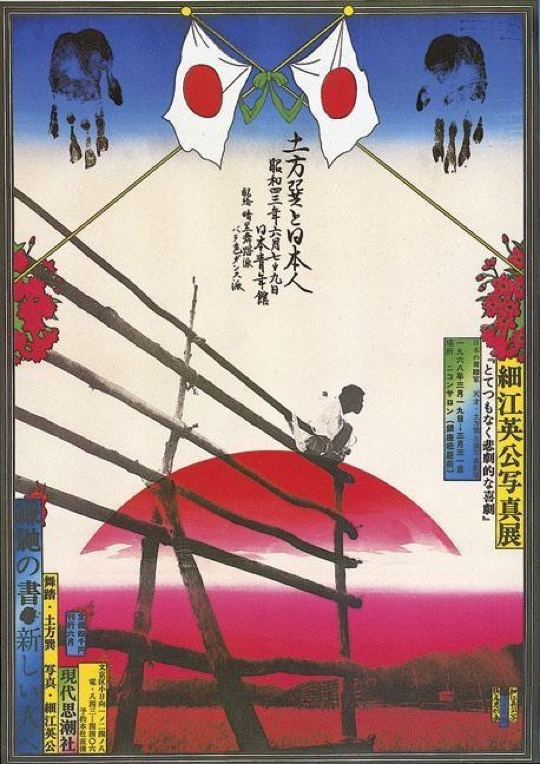
Eikoh Hosoe: Photographs 1960-1970s - a survey of the photographer's work, with one of Hosoe's photographs on the cover. Image courtesy Aperture Store. Promotional material from the publisher.
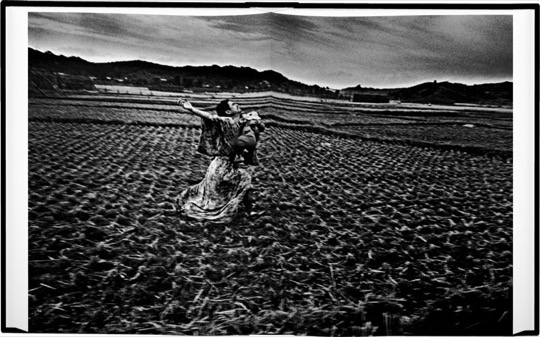
Spread from Kamaitachi - Tatsumi Hijikata in butoh dance. One of Hosoe's most iconic images. Promotional material: Aperture Store.
Further reading
- Eikoh Hosoe at MoMA - works in the collection
- Eikoh Hosoe at SFMOMA - works in the collection
- Eikoh Hosoe at Taka Ishii Gallery - archive and biography
- The New York Times: Eikoh Hosoe obituary - remembrance
- Kamaitachi at Aperture - book at the publisher
- Japanese photography books on Amazon
Co-created by human and AI.