Some links on this site may be affiliate links
Shomei Tomatsu: Photographer of a Divided Japan
Shomei Tomatsu: Photographer of a Divided Japan
One of Shomei Tomatsu's most famous photographs is of a bottle. A glass bottle, ordinary, the kind that might have held water or soy sauce. Except it is deformed - melted and frozen into a shape no human intended. Nagasaki, 1945. The atomic bomb, and then silence.
Tomatsu was fifteen years old. Born in Nagasaki in 1930, he survived the war, though his city did not. He spent the rest of his life photographing what the bomb left behind: scars on the earth, on objects, on people. The longer you look at his images, the clearer it becomes that he was not photographing the effects of an explosion. He was photographing the effects of a rupture.
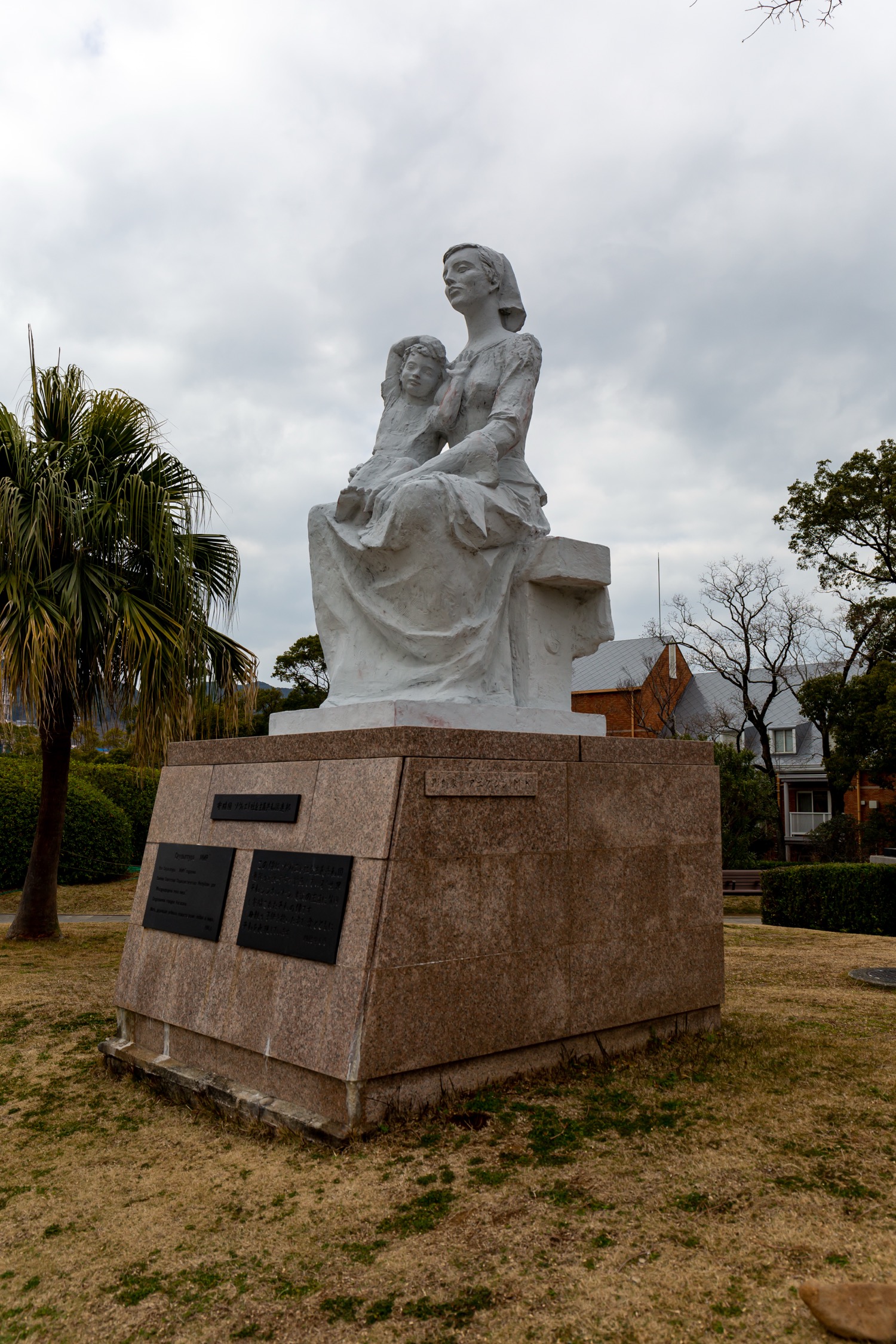
The Nagasaki Peace Statue by Seibo Kitamura, standing in Nagasaki Peace Park, commemorating the victims of the atomic bombing of August 9, 1945. Photo by Balon Greyjoy, CC0. Source

The man from a city that ceased to exist
Shomei Tomatsu was born in Nagasaki in 1930. When the atomic bomb destroyed the city on August 9, 1945, at 11:02 AM, he was a teenager. His home was a few kilometers from the hypocenter - close enough to see everything, far enough to survive.
That date is the key to his entire body of work. Tomatsu was not a photojournalist in any conventional sense. He was a chronic witness, someone who spent a lifetime trying to understand what happened to his country. His early work from the 1950s, while studying photography in Tokyo, was already not about composition exercises. He was looking for traces of America in Japan - neon signs, hamburgers, high heels, soldiers in civilian clothes.
And chewing gum. The title of his famous 1956 essay is "Chewing Gum and Chocolate". It was his way of describing what America brought to Japan: sweetness, consumption, the promise of a better life - but also the loss of something no one could name.
Nagasaki, the wound
His most famous series is dedicated to Nagasaki. It took shape over years - Tomatsu returned to his hometown again and again, photographing what remained and what had grown on the ruins. His Nagasaki images are not reportage. They are a meditation on matter that remembers.
One frame shows a glass bottle deformed by the shockwave until it resembles sculpture. Another shows a wristwatch whose hands stopped at 11:02. Everyday objects became relics. Tomatsu understood that he did not need to photograph the victims themselves to tell a story of suffering. The things that surrounded them were enough.
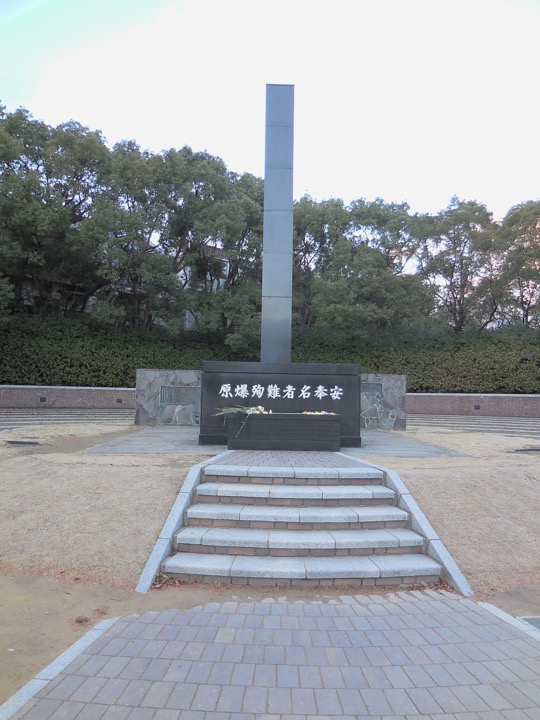
The black obelisk marking the hypocenter of the atomic bomb explosion in Nagasaki. The point from which the wave of destruction radiated on August 9, 1945. Photo by Edogang1, CC0. Source

Occupation through the lens
The 1950s and 60s were a time of deep cultural schizophrenia in Japan. American military bases, Coca-Cola, jazz, pin-up girls on one side; traditional temples, tea ceremonies, centuries-old landscapes on the other. Tomatsu photographed this tension better than anyone.
His images of American soldiers in Japan are unsettling not because they show violence - but because they show ordinariness. Soldiers buying souvenirs, walking with Japanese girlfriends, drinking beer. That ordinariness was the greatest evidence of change. Occupation is not always a helmet and a rifle. Sometimes it is a cheeseburger and a smile.
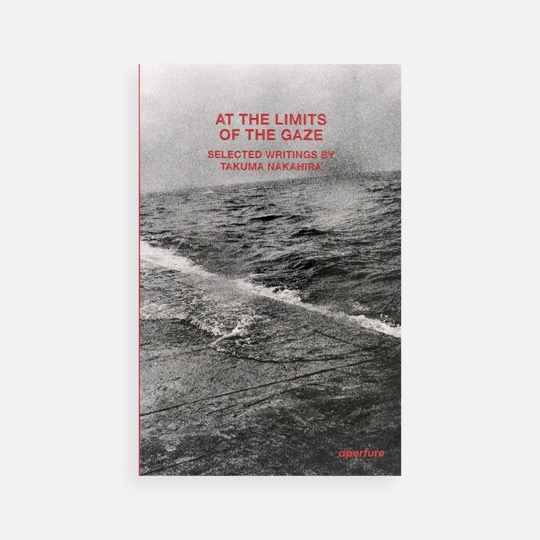
Chewing Gum and Chocolate by Shomei Tomatsu - the title comes from his famous essay on the Americanization of post-war Japan. Image courtesy Aperture Store. Promotional material from the publisher.
Tomatsu also photographed the base at Yokosuka, the port where American ships docked. The sight of an aircraft carrier against Japanese hills - that was the tension that interested him. He was not documenting history. He was documenting the moment when one culture enters another and nothing will ever be the same.
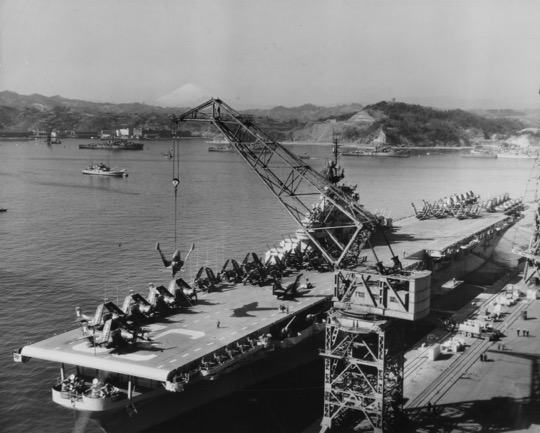
USS Leyte (CV-32) at the US naval base in Yokosuka, Japan, 1951. A symbol of American military presence in post-war Japan. Photo by JustSomePics, public domain. Source
,_Yokosuka,_Japan,_1951.jpg)
Okinawa: another Japan
In 1972, Tomatsu published "The Pencil of the Sun" - a book born from years of traveling through Okinawa. This series is different from Nagasaki. It is sunnier, more exotic, but also more bitter.
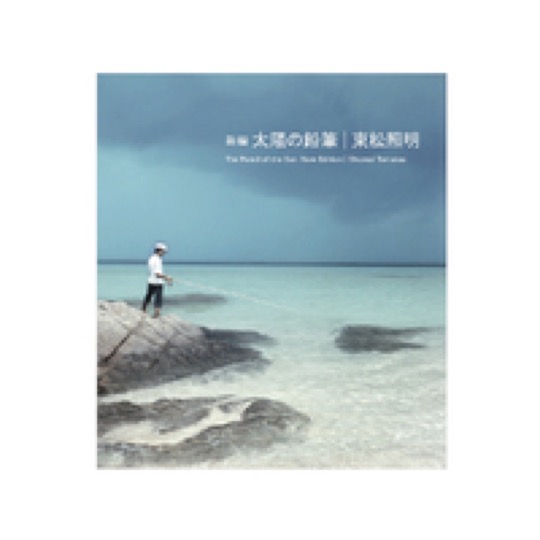
The Pencil of the Sun by Shomei Tomatsu (new edition) - a portrait from the Okinawa series. Image courtesy Shashasha. Promotional material.
Okinawa was - and in some ways still is - a separate world. For centuries the independent Ryukyu Kingdom, then colonized by Japan, then placed under American administration after the war. Tomatsu saw in Okinawa a metaphor for all of Japan: a country that does not know who it is.
His Okinawa photographs are portraits of people, landscapes, objects. American road signs next to traditional tiled-roof houses. Old women in kimonos, children in baseball uniforms. Tomatsu did not judge. He registered this schizophrenia with both tenderness and distance.
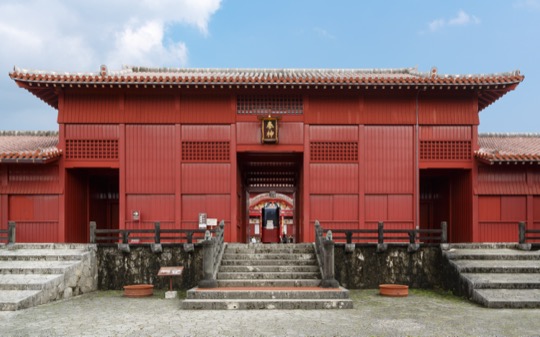
Shuri Castle in Naha, Okinawa - the former seat of the Ryukyu kings. Destroyed during World War II, rebuilt as a symbol of Okinawan identity. Photo by Cccefalon, CC BY-SA 3.0. Source

Protest and rebellion
Tomatsu also photographed Japan's youth of the 1960s - protests against the US-Japan Security Treaty (Anpo), student demonstrations, the birth of counterculture. His images from that period have an energy absent from his earlier work. They are chaotic, sharp, full of motion.
But he was never a documentarian in the journalistic sense. Tomatsu always stood to the side, watching. Even in a crowd of demonstrators, he remained an observer. This makes his protest photographs less political than existential. Young people are shouting, but their scream has no addressee. It is the scream of a whole generation that inherited a world after catastrophe.
Silence after years
Tomatsu died in 2012, the same year as Masahisa Fukase. Two great names of Japanese photography left at the same time, as if closing an era.
In his final decades, Tomatsu worked on his archive, organizing his own output. He published many books, but none of them is a summary. Because his work cannot be summarized. It is a series of questions, not answers.
His influence on photography is enormous - not just in Japan. Show a photograph of a destroyed object, and Tomatsu's shadow is always in the background. Show a portrait of a country in a crisis of identity, and anyone who knows will nod toward Nagasaki.
What he teaches us
Tomatsu photographed Japan at the moment when it stopped being what it was, and did not yet know what it would become. That is the most universal lesson of his work: that the best photographs are made not when we document stability, but when we document transformation.
His camera did not seek beauty. It sought the truth about what happens when a nation must reinvent its identity. Chewing gum and chocolate - sweet symbols of Americanization - became metaphors for something much deeper: the loss of innocence that was not a choice but a necessity.
And perhaps that is why his photographs remain relevant. Because every country where tradition and globalization collide, past and future, trauma and hope - every such country has its Tomatsu. Someone who will raise a camera and photograph a bottle melted by history.
Further reading
- Shomei Tomatsu at SFMOMA - works in the collection
- Shomei Tomatsu at MoMA - works in the collection
- Taka Ishii Gallery - archive and biography
- The Guardian: Shomei Tomatsu obituary - remembrance by Sean O'Hagan
- The Pencil of the Sun: New Edition - books on Shashasha
- Japanese photography books on Amazon
Co-created by human and AI.