Some links on this site may be affiliate links
Was Photography Always a Lie?
Was Photography Always a Lie?
In 1855, Roger Fenton boarded a ship to Sevastopol to photograph the Crimean War. He was the first war photojournalist in history. His images were meant to show the world the truth about war. They were meant to. They did not.
Fenton took a heavy wet-plate camera and a darkroom wagon to Crimea. To take a photograph, he had to set up the scene, expose the plate for a dozen seconds, then develop the image on the spot. He could not photograph a battle - it was too fast. He could not photograph the dead - his superiors deemed it inappropriate.
He could only photograph what they wanted to show.
And that is what he did.
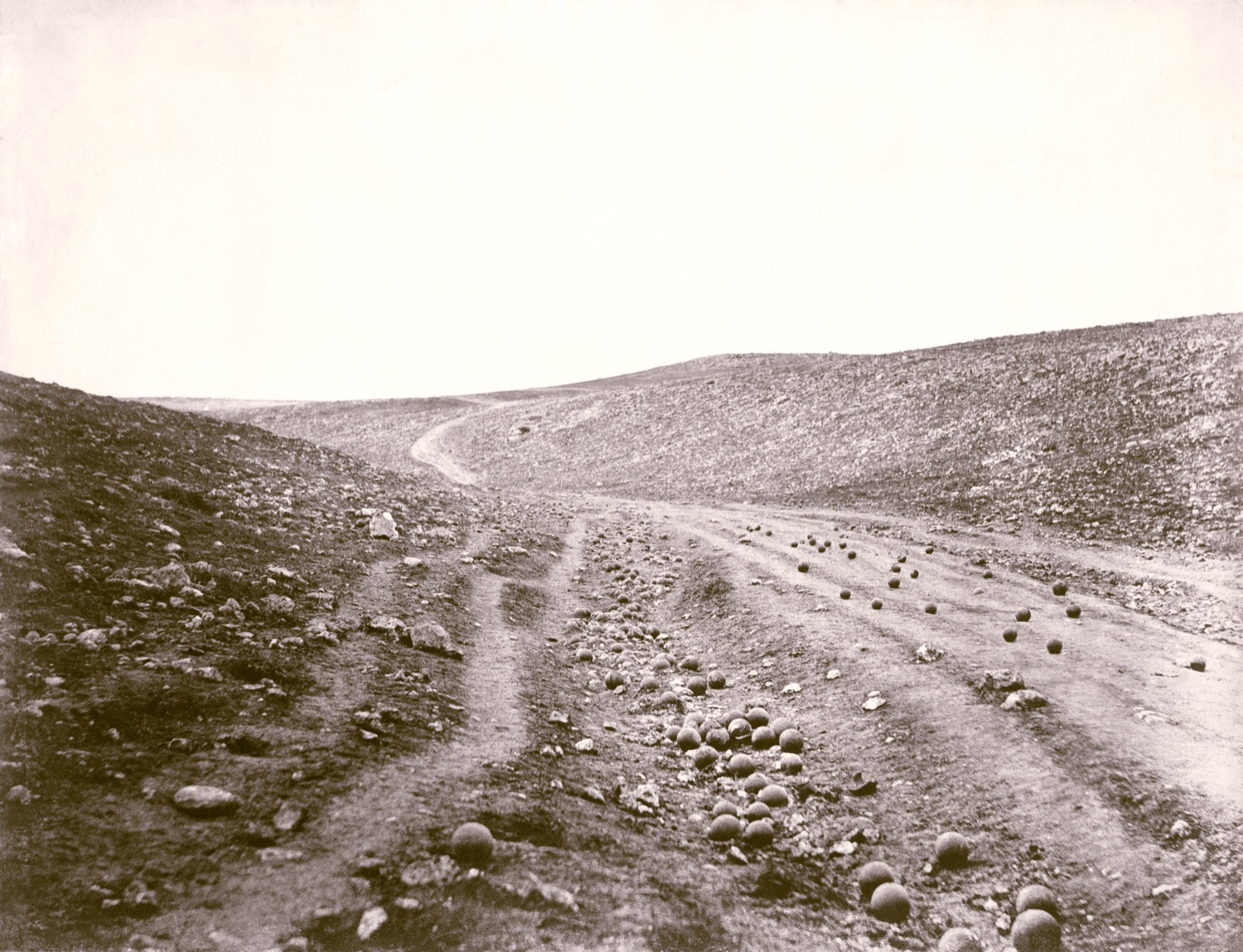
Valley of the Shadow of Death (1855) by Roger Fenton - one of the earliest war photographs in history. Public domain. Source

The first lie of photography
Fenton's most famous image from Crimea is titled Valley of the Shadow of Death. It shows an empty road littered with cannonballs. This photograph has always been controversial - not because it is graphic, but because it may be the first known case of photographic staging.
Two versions of the same photograph exist. In one, the cannonballs lie on the road. In the other, the road is empty. Fenton most likely arranged the cannonballs himself to heighten the drama. Or he shot the scene first with balls, then without.
Which came first does not matter. What matters is that both exist. And that from the very beginning, photography's relationship with truth was fragile.
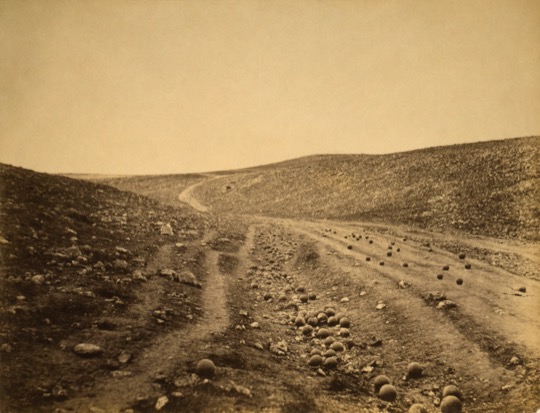
The second version of Valley of the Shadow of Death - the same road, without cannonballs. Two negatives, one reality? Public domain. Source

The retouching empire
Fenton was not an exception. Throughout the twentieth century, photography was manipulated on a massive scale. The most spectacular examples come from the Soviet Union, where political photographs were retouched with industrial regularity.
When Leon Trotsky fell out of favor, he was removed from photographs with Lenin and Stalin, as if he had never existed. When another commissar was purged, he disappeared from images. Soviet archives are filled with photographs where cut-out figures left ghostly gaps - empty spaces where a condemned person once stood.
This was not photography. This was a document manufactured by power.
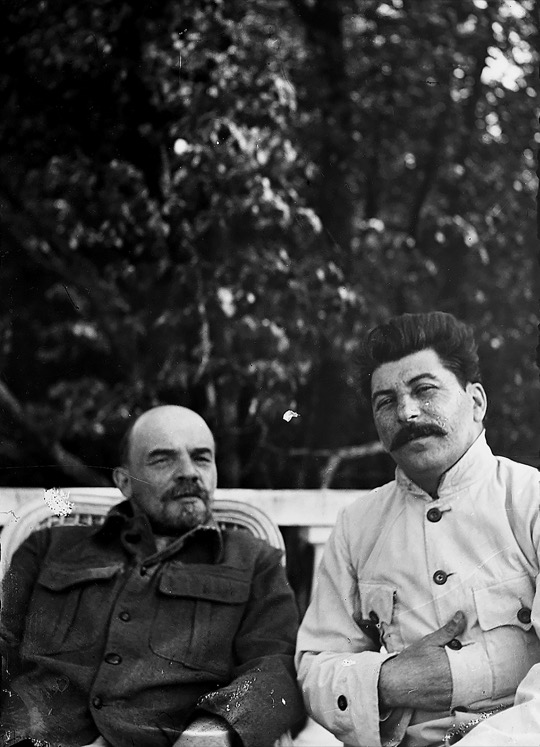
Stalin and Lenin in 1922. Public domain. Source

Photoshop only sped things up
When Photoshop arrived in the 1990s, the world erupted in outrage. Magazines were accused of deceiving readers - models with unnaturally long legs, poreless skin, waists cinched beyond anatomical possibility.
But the same thing had been done earlier in the darkroom, with scissors and an airbrush. The difference was only in scale, not in principle. 1950s fashion photography was also a lie - just a better one, because no one knew how it was made.
Photoshop democratized the lie. And this time, we were truly frightened by our own reflection.
The historical image does not exist
If we look at the history of photography carefully, we see that every era had its own manipulation techniques. In the 1930s, American FSA photographers cropped, captioned, and selected images to support New Deal policy. Dorothea Lange did not so much document poverty as construct it - choosing the angle, the light, the moment.
The Vietnam War was the first television war, but its most famous photographs were chosen, cropped, and captioned to tell a specific story.
Documentary photography was never pure truth. It was always chosen truth.
Learning to see differently
Photography historians have long known that a photograph is not a window onto the world. It is an interpretation. The choice of frame, moment, lens, film, developer, paper - each of these stages is an act of interpretation.
Street photographers have said this for decades: a photograph does not document reality, it creates it. The magic photograph is not the one that faithfully reproduces what was before the lens. It is the one that makes us see something we would not have seen without it.
In this sense, photography has always been closer to literature than to a chronicle.
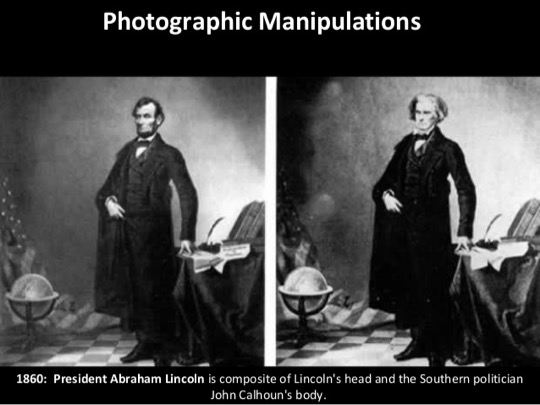
A history of photo manipulation from the 1940s to the present. Photo by DerHexer, CC BY-SA 4.0. Source

And now AI
This is where artificial intelligence comes in. Today anyone can generate a photorealistic image by typing a few words. Midjourney, DALL-E, Stable Diffusion - tools that create images from scratch, without a camera, without light, without reality.
And again we hear the same cry: photography is dying.
But is it really?
Perhaps AI is doing what photography has always done - only without the camera. Perhaps this is not the end of photography, but its liberation. If photography was always an interpretation, not a record, then AI is simply another tool of interpretation.
Documentary will not disappear. It will become more expensive, rarer, more valuable. When every image can be faked, a genuine document becomes a treasure. But alongside it, a new field will emerge - photography without a camera, images without a reference, reality without an object.
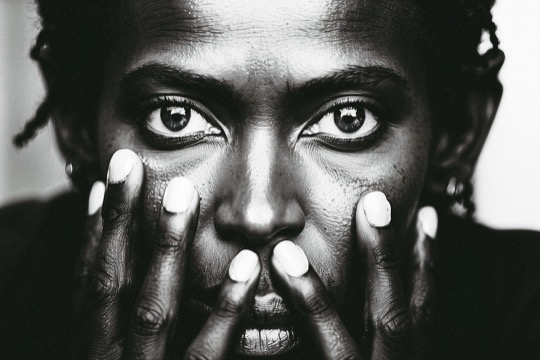
A portrait created using AI and Lightroom - hybrid photography, human and machine (Inspired by Anton Corbijn's Miles Davis portrait, 1985). Photo by Mariusz Nawrocki, public domain. Flickr
A question without an answer
So we return to the question in the title. Was photography always a lie? Yes. No. Perhaps. If by "lie" we mean the deliberate falsification of reality, then photography has lied from the very beginning - from Fenton, through Stalin, to Photoshop and AI. If by "lie" we mean the subjectivity of seeing, then photography did not so much lie as it always told a story. And a story does not have to be true to be valuable.
Perhaps the question is not "was photography always a lie" but "why did we so badly want to believe it told the truth?"
Perhaps we were the naive ones. Not photography.

AI-generated images differing only in prompt strength - proof that in photography without a camera, the same thing matters as in traditional photography: the author's decision. CC BY-SA 4.0. Source

And at the end of this journey, creator, you will come to realize that sand under bare feet, cold stream water, and rays of the rising sun on your face are more valuable than all the prompts in the world.
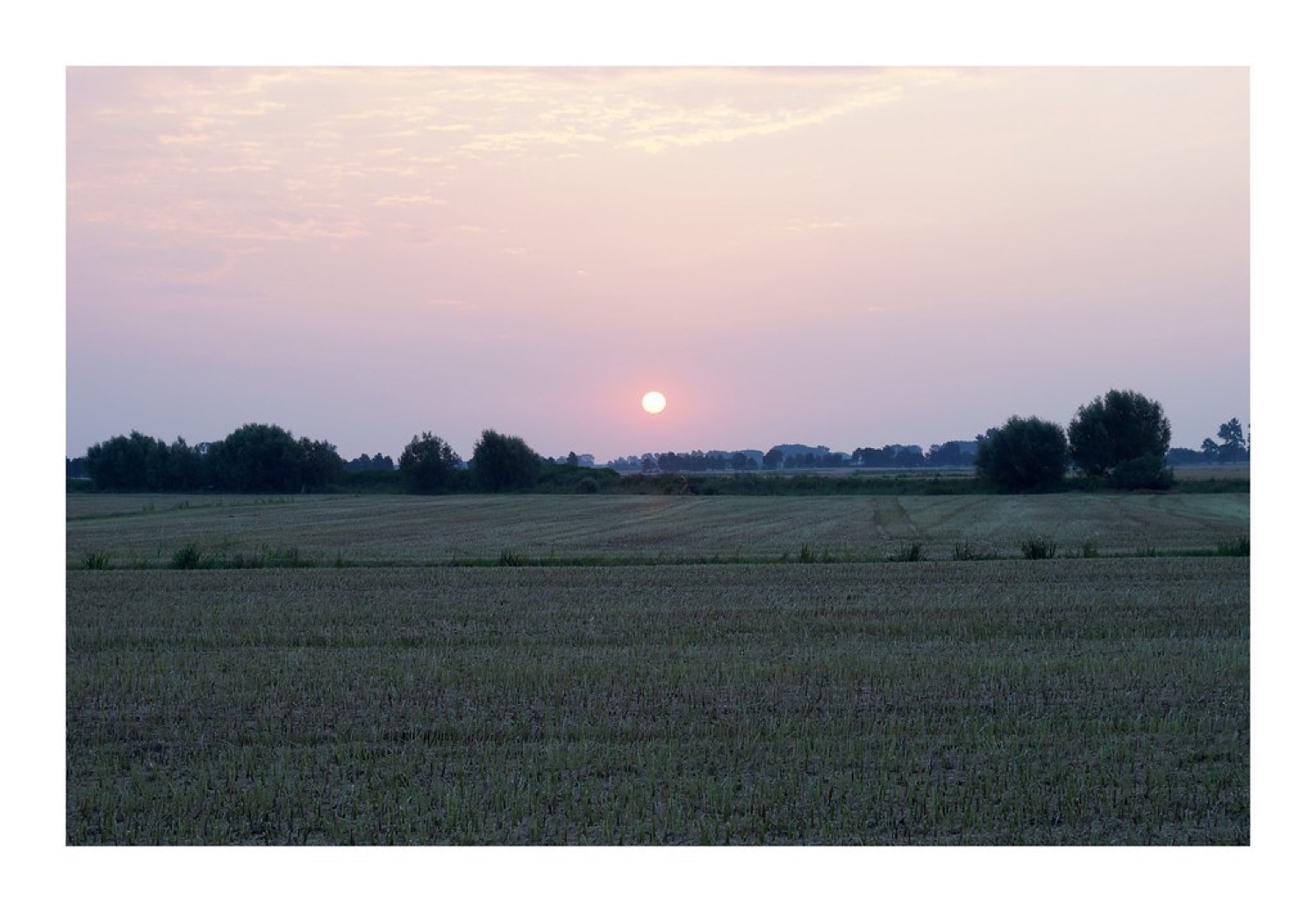
A sunrise somewhere in Żuławy. Photo by Mariusz Nawrocki, CC BY-ND 4.0. Flickr
Further reading
- Wikipedia: Photo manipulation - history of techniques
- Michael Shermer: The believing brain - why we believe what we see
- Photography truth books on Amazon
Co-created by human and AI.